

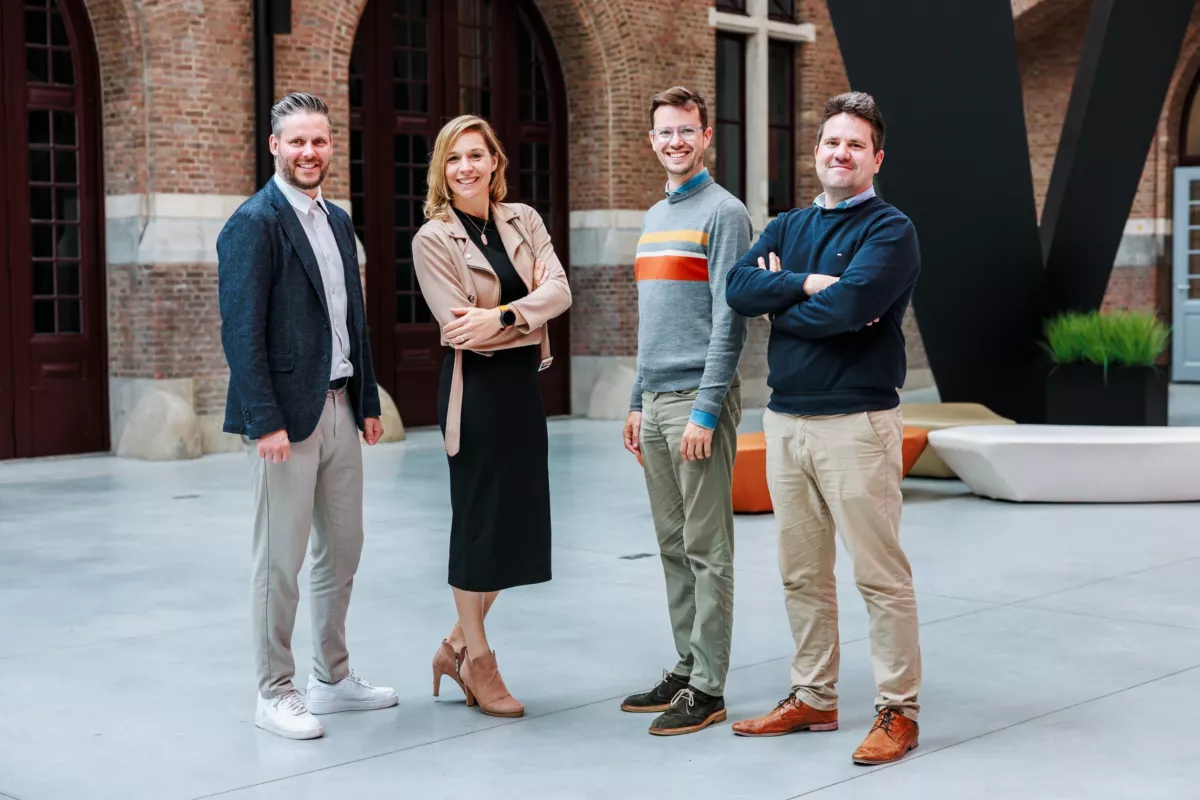
Isabel Vermeulen, General Manager of BlueChem, on the Antwerp chemistry ecosystem, and why the city is the natural home for Europe’s largest chemistry congress.
Antwerp is home to one of the largest integrated chemical clusters in the world, and from 12 to 16 July 2026 it welcomes ECC10, the tenth EuChemS Chemistry Congress and the biggest chemistry gathering in Europe. Ahead of the congress, we spoke with Isabel Vermeulen, the newly appointed General Manager of chemistry incubator BlueChem. A chemical engineer turned strategist, and a triathlete outside the lab, she explains how the Antwerp innovation cycle works, why proximity alone is never enough, and how she hopes the ecosystem will be remembered five years from now.
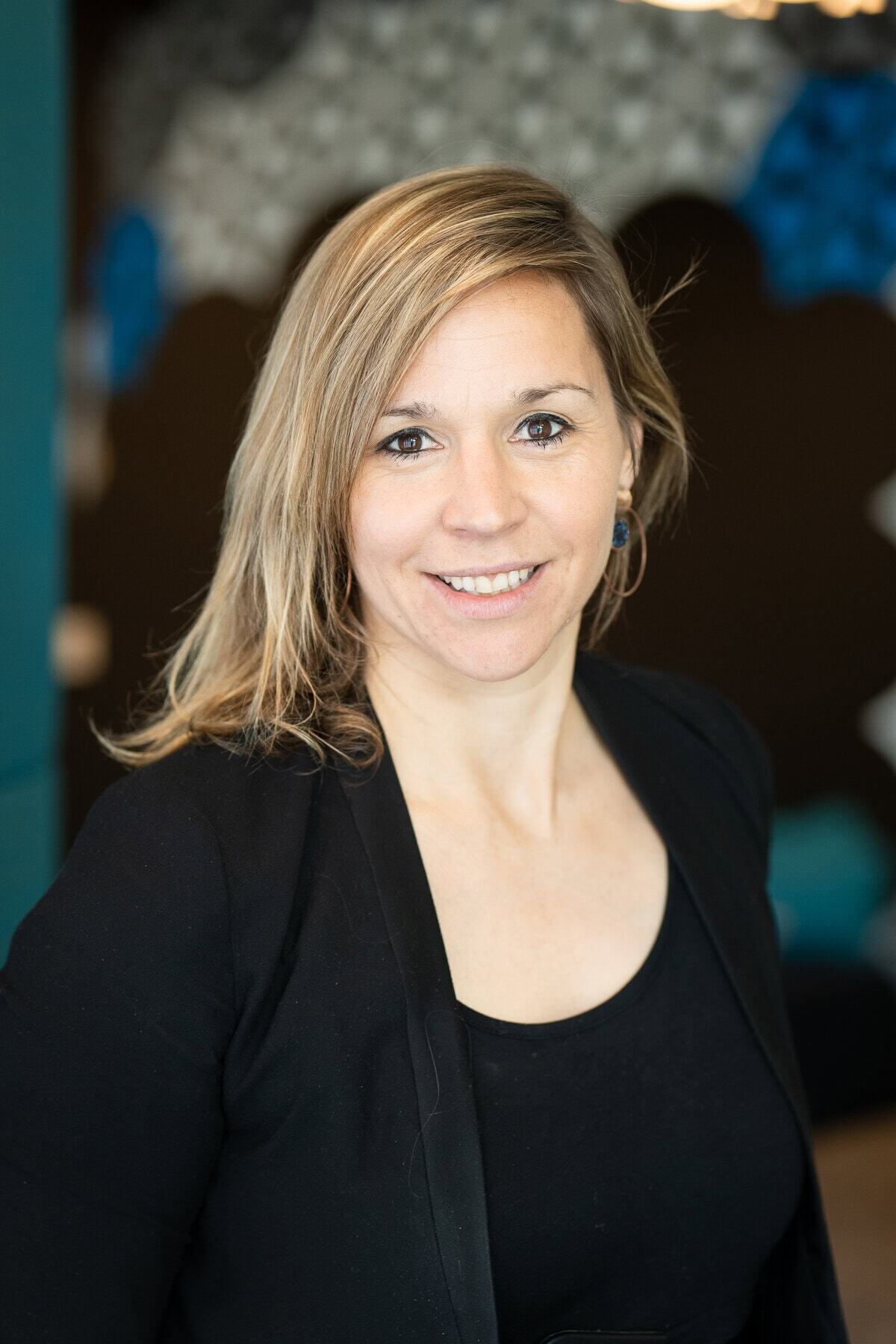
Isabel Vermeulen, General Manager of BlueChem
Isabel, you only recently became General Manager of BlueChem. Could you briefly introduce yourself, where you come from, and what drew you to this role?
I come from a quite diverse background. I’m a chemical engineer with a PhD in waste valorisation. I then stepped into R&D at Umicore for seven years. One of the responsibilities was process design and scaling of battery recycling units, from one-kilogram tests to 20-ton-per-day pilots. These engineering challenges are one of the aspects that start-ups and scale-ups are confronted with on a daily basis.. After that, I moved into a more strategic angle, in Umicore’s internal incubator, and afterwards I was active as domain lead for sustainability transformation at TomorrowLab. When this position crossed my desk, I immediately saw the opportunity to combine both worlds, the technical and the strategic, in one role. It was a clear match.
It was just before your time here, but in 2025 the City of Antwerp and BlueChem won the European Enterprise Promotion Award. What did that recognition reward, exactly?
It was a recognition of our ecosystem. In the end, that is what makes the Antwerp ecosystem so special: we represent every angle. From idea to industrial implementation. We have a player for every step, including the market itself. This ecosystem ranges from chemical industry presence to waste processors and key logistics players. That creates a very intriguing ecosystem where you can actually build.
Have you already seen a change since the recognition? Are more international founders knocking on the door?
Absolutely. That ecosystem approach has been our USP since we started. Being recognised on a European level is validation. You can call your own ecosystem intriguing, but having that confirmed externally makes a real difference.
In the first weeks since I started, I have already seen significant interest from international founders. They are looking for that broader ecosystem to plug into, and the EEPA recognition assists in the speed at which people find us. Aside from the obvious mouth-to-mouth of the entrepreneurs themselves.
The full innovation chain in a single city is something only Antwerp really offers. Can you walk us through that cycle for someone who has never heard of it?
The cycle is interesting from two angles. The first is technological. You begin with an idea, typically at a university, where research is done without the immediate pressure of economics. Antwerp and Flanders are very well represented there. From the idea you start to experiment, and at some point, you say: maybe this could be a first step into the market. This first experimentation, idea creation, and technology refinement, including piloting, is supported by BlueApp from the University of Antwerp.
That is when you move from the university into an incubator like BlueChem, where you are supported in building your own company, finding HR, making your first industry contacts, and growing steadily from a good idea into an actual prototype or working recipe. Once you have that first batch of material, you need to prove it works on a bigger scale. That is where NextGen Demo comes in, the demo and district area on the former General Motors site in the port of Antwerp. They deliberately chose to divide it into smaller chunks so that smaller parties can embed themselves in the bigger port infrastructure and market. Where better to prove your concept than right in the heart of one of the largest integrated chemical clusters in the world?
But that is only the technology level. The second angle is market. You have all these big companies present here, and BlueChem doesn’t just give you a lab and an office. We create the sandbox where you can have the conversations: does my business plan tap into that market? What hurdles do you see? Those discussions are what eventually allow your technology to fit into a real, existing market. That is the difference between an invention and an innovation. An invention is a great technical idea that works. An innovation is when it lands in the market and solves a problem for people. Finding how your solution fits multiple problems, that is the market angle. And that is what this ecosystem can give you.
So the magic is really in the proximity?
Yes, but that proximity isn’t a guarantee of success. It’s not enough to put everyone in the same place. You need facilitation. Together with the City of Antwerp and the Port of Antwerp Bruges, we make those cross links happen. We pick up on what people are looking for, set up the discussions, and challenge them multiple times. So it is not about waiting for serendipity. The kitchen is structurally built to work.
Do you have a concrete example of a company that has travelled the full cycle?
We have several, but the textbook example is D-CRBN. They started at the University of Antwerp with Annemie Bogaerts on plasma technology, ran their first lab experiments, moved into BlueApp, then started up at BlueChem, and have now raised significant capital to enter the demo phase (raised €17.5 million in a Series A funding).
Inopsys is another. They started at BlueChem in the earliest days and were acquired after 4 years by Indaver, itself part of the Katoen Natie group, which is also present in the Port of Antwerp Bruges. Triple Helix is on the verge of demoing, in collaboration with iPRACS at the University of Antwerp and the Flemish innovation cluster Catalisti. And Triple W stayed at BlueChem for only a couple of months before moving to NextGen Demo, where it is already in operation.
In a digital scaling context, you might say: is that fast? But in process chemistry, this pace is genuinely fast and valuable. We are fortunate that, in just five years, we already have several companies that have travelled this road successfully.
BlueChem itself is also growing. What can we expect from the expansion?
Construction on our new campus starts in August 2026. It should open in Q4 2027. From an infrastructure point of view it is more labs and offices, a combination that companies on the demo and district side specifically need.
More importantly, it is another piece of fertile ground where people can meet, discuss, and incubate. With these two buildings, we will have two pivotal points. BlueChem Base, this building, is where a researcher becomes a startup, scaleup or spinoff. BlueChem Port is where that company makes the next step: from entrepreneurship into industry leadership.
How does the BlueChem Kickstart Fund fit into that picture?
It is a wonderful support scheme from the City of Antwerp. When a founder sets up a lab here, they can claim a refund of up to 80 percent of their lab equipment costs through the Kickstart Fund. That is an enormous lever at the very beginning.
Normally a startup would be happy just to land in an equipped lab. Here, they get the freedom to design the lab to their own needs, financed in large part by the city. They start from a blank canvas, and we help them fill it. We are even exploring an AR/VR tool with companies in our community, so that a founder can quickly see how their canvas could be laid out. Cook your own dish. We provide the ingredients and the support at every step.
Antwerp is often called one of the largest chemical clusters in the world. Or the largest integrated chemical cluster in Europe. What makes it tick?
Depending on how you measure it, you will hear both. But the truly distinguishing factor is the integration level. It is among the highest in the world. All these companies share a long history of working and collaborating. That gives some challenges, of course, but it also gives a collaborative spirit. The integration is part of the DNA of our port.
And that DNA, combined with what Antwerp already brings in fashion, design, and craftsmanship, creates an ecosystem that looks wider than chemistry alone. That is what makes it different.
From 12 to 16 July, the 10th EuChemS Chemistry Congress comes to Antwerp, the largest chemistry congress in Europe. What does that mean for BlueChem?
It is an opportunity to raise the position of chemistry in Antwerp. We are actively collaborating: there will be a BlueChem tour: we want to inspire chemists who are thinking about taking that step. What does it mean for me? How could I do it? We will also participate in the side programme, pointing out what chemistry means today and why Antwerp is the place to be busy with it.
Why is Antwerp the right place for a chemistry congress?
The market is here. The largest integrated chemical cluster in the world is right on your doorstep. That makes Antwerp the most logical place to think about the chemistry of the future. And it gives the conversation a healthy reality check. Research must remain independent, but research and market can’t be two parallel tracks. Having both present in the same city ensures the relevance of what we build for tomorrow.
Any message to delegates still on the fence about coming?
No matter what angle or perspective you have on chemistry, we can cover it here. If you are thinking about offset markets in chemistry or how chemistry will evolve in the coming years, it is important to be present and to set up the conversations. Don’t question it. Just be there, flavour it, set up the discussions. If you have an opinion on chemistry, this is where it gets heard.
You are a triathlete yourself. In an earlier interview, you compared sustainable chemistry to a marathon, starting every day with enthusiasm. What message would you give to entrepreneurs starting?
That metaphor holds in a lot of angles. When I worked in strategic advisory, we used to say: it is like climbing the Himalaya. Whatever the goal is, a triathlon, a marathon, a climb, it is always a combination of competence and mindset. It is not only physical shape or technical mastery. It is also surrounding yourself with the right people, knowing the right pace, the right nutrition schematics, and being clear on what your goal really is.
We too often set immense goals at which you can almost only fail. Make every step a celebration. Surround yourself with people with good enthusiasm, the right mindset, the tips and tricks. Be willing to redirect your goals along the way. The metaphor I like best is a backpack on a mountain: you fill it with competences, traits and people, so that when the day arrives, you are mentally and physically ready. And then it has to stay fun, all the way through.
I did my first Ironman one and a half years ago. My goal each time was simply to reach the finish and to say: I want to do this again. If your only measure is times and KPIs, the bar can always be raised further. If you enjoy the ride, you are always winning. The same is true of scaling a startup: appreciate the journey, shift gears when needed, and gather people around you who cheer for you and want you to succeed. That is the magic recipe.
What do you hope we will be saying about the Antwerp ecosystem in five years’ time?
That we are recognised, not only on the technology level but also on the market level, and on integration. That we have taken the first steps into new kinds of chemistries, new collaborations and new value chains. That is what we as a chemical industry need to achieve: putting the puzzle pieces together for tomorrow, and shifting the industry from its current position into one full of hope and possibilities. If we manage that in collaboration with a lot of partners, that would be my key achievement.


