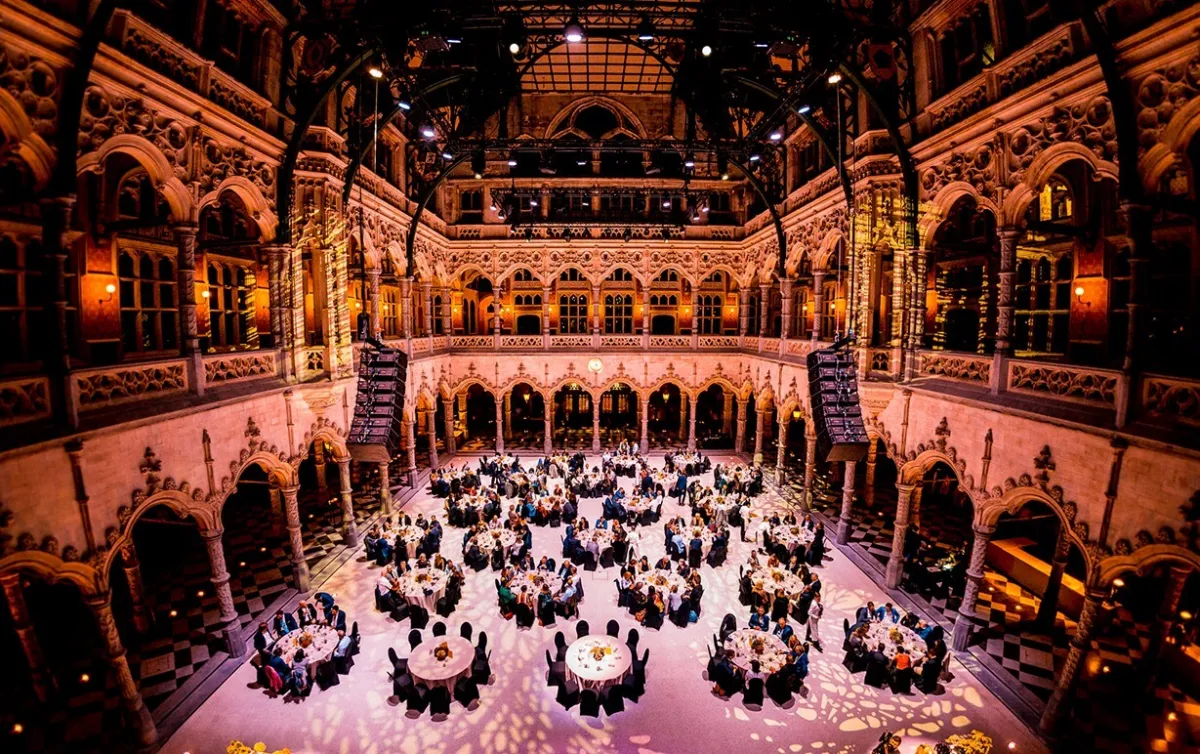
When people meet in person, ideas speed up. Conversations become sharper, collaborations form faster, and new perspectives appear in the space between disciplines. If you want your conference or event to generate real progress, the destination matters because the local ecosystem can either stay in the background or actively power what happens on stage and beyond it… and Antwerp is built for the second option.
As an innovation powerhouse, Antwerp does not rely on a single flagship sector. It operates through strategic, interconnected clusters where industry, research, startups and the public sector collaborate at scale. For conference organisers, that translates into something very practical: more speakers, more partners, more site visits, more living labs, and more opportunities to create programme moments that delegates will remember and act on.
Antwerp’s innovation approach is intentionally ecosystem-driven. Rather than presenting “the city” first, think of Antwerp as your venue, with a set of ready-to-plug-in content environments that can strengthen your agenda, widen participation, and increase legacy potential.
If your conference touches smart cities, logistics, industry 4.0, cybertech, maritime tech or data-driven policy, Antwerp gives you immediate access to an active tech community. The innovation hub The Beacon brings together startups, scale-ups, corporates and researchers working on digital solutions for port, city and industry. That means practical add-ons for your programme: curated innovation tours, demo moments, practitioner panels, and problem-solving formats that go beyond keynotes. Conference multipliers you can build here include:
Antwerp’s health ecosystem combines a dense hospital network, top research institutions and a diverse urban context that makes health innovation tangible and testable. Partners such as the University of Antwerp, the renowned Institute of Tropical Medicine, and initiatives including Vaccinopolis open the door to content that is both scientifically robust and grounded in practice. Options include:
Few places can match Antwerp’s credibility in chemistry and industrial transition. The chemical cluster at Europe’s second-largest port is substantial and in active transformation towards circular and climate-aligned innovation. Innovation hubs such as BlueChem, which support clean-tech startups, and BlueApp, a pre-incubator that brings together startups, companies and the University of Antwerp’s expertise. Or discover NextGen District, an industrial port site that focuses on sustainable innovation, recycling and waste valorisation. For organisers, this enables strong technical content plus concrete learning moments on industrial decarbonisation, circularity and new materials. Organisers benefit from:
With Port of Antwerp-Bruges as a world-class port, the city becomes a real-world testbed for hydrogen, CO₂ capture, circular economy, and smart mobility. This is the kind of environment where plenary themes can be linked to tangible demonstrations and operational case studies. It is also a strong context for cross-sector conferences because port transition touches policy, technology, supply chains, energy and society. These work together to provide:
Ultimately, Antwerp is a collaboration model that supports conferences. Antwerp’s ecosystem is powered by a triple-helix collaboration among the City of Antwerp, the Port of Antwerp-Bruges, and the University of Antwerp. For conference organisers, this matters because it makes access easier. It increases the likelihood that you can connect with the right researchers, companies, labs, startups and public stakeholders to enrich your programme.
Antwerp also invests in cross-cluster connection through curated encounters like The Gathering, designed to stimulate dialogue and cross-pollination, between entrepreneurs, Port of Antwerp-Bruges, University of Antwerp, the city and innovation hub, rather than passive networking. This mindset aligns strongly with conferences that aim to foster collaboration, not just audience engagement.